Service Dog Training in California: Laws, Programs and Costs
This page explains the law in general terms. It is not legal advice. For a specific situation, contact the agency listed on this site or an attorney.
A service dog can change daily life for a person with a disability. In California, getting one means sorting out two layers of law, choosing between a program-trained dog and an owner-trained dog, and finding out what a program actually costs. This guide walks through each step in plain English.
It covers who qualifies, what the ADA and California statutes say, how training works, what is known about cost, and which accredited California organizations to look at first. Where the sources do not publish a number, we say so and point you to the organization instead of guessing.
In this guide
- Key takeaways
- Who qualifies: the ADA and California definitions
- Your rights under California law
- Two routes: program-trained or owner-trained
- What service dog training involves
- Costs and how to plan for them
- Where to start, and where to complain
- Sources
Key takeaways
- Under the ADA, a service animal is a dog individually trained to do work or perform tasks for a person with a disability. The task must be directly related to the disability (U.S. Department of Justice, ADA.gov).
- Emotional support, therapy and comfort animals are not service animals under the ADA. Dogs whose sole function is comfort or emotional support do not qualify.
- There is no official service dog registry or required certification. Online registration and certificate documents convey no ADA rights.
- You may train the dog yourself. The ADA does not require professional training.
- California's Civil Code 54.1 to 54.3 and Penal Code 365.5 add state-level access rights, penalties and damages.
- Dogs in training are covered in California, but only on a leash and with a county-issued assistance dog identification tag.
- Cost is not published for most California programs. Canine Companions, Freedom Dogs and Sam Simon Foundation state that their services are free. For the rest, ask the organization.
Who qualifies: the ADA and California definitions
The federal definition
The U.S. Department of Justice explains in its ADA Requirements: Service Animals guidance that service animals are dogs individually trained to do work or perform tasks for people with disabilities. The key phrase is "individually trained." A dog that is simply well behaved, or that comforts its owner by being present, does not meet the definition.
The task has to relate directly to the person's disability. The DOJ describes dogs whose sole function is comfort or emotional support as outside the definition. That is the line between a service dog and an emotional support animal, and it matters in every public place.
The California definition
California's statutes name three kinds of dogs: guide dogs, signal dogs and service dogs. A signal dog alerts a deaf or hard of hearing person to intruders or sounds. Penal Code 365.5 describes a service dog as a dog individually trained to do work or perform tasks for an individual with a disability. Its examples include minimal protection work, rescue work, pulling a wheelchair and fetching dropped items.
Two details are worth knowing. First, the California statutes cover dogs only. Miniature horses appear in the ADA rules and in the Civil Rights Department's housing regulation (California Code of Regulations, title 2, section 12005), not in the access statutes. Second, Civil Code 54.1(d) makes any violation of the ADA also a violation of section 54.1. So the federal rules and the state rules work together.
What does not count
Emotional support dogs are not service dogs for public access. California treats them separately. Health and Safety Code sections 122317 to 122319.5 (the law known as AB 468) set rules for emotional support dog letters and sales. Section 122318 limits what a health care practitioner's letter can say and requires, for example, a clinical evaluation and a minimum client relationship of 30 days.
Emotional support animals do have a place in California housing and employment law, covered below. They simply do not carry the public access rights of a service dog.
No registry, no certificate
The DOJ says plainly in its service animal FAQ that online service animal certification or registration documents convey no ADA rights and that the DOJ does not recognize them. Mandatory service animal registration is not permitted under the ADA. Do not pay a website for a "registration," vest package or ID card and assume it protects you. It does not.
Under the ADA, when the need for the dog is not obvious, staff may ask only two questions:
- Is the dog a service animal required because of a disability?
- What work or task has the dog been trained to perform?
They cannot ask about your disability, require documentation or ID, or ask for a demonstration.
Your rights under California law
Public access
Civil Code 54.1 guarantees full and equal access to public accommodations, medical facilities, transportation, housing offered for rent and other places open to the public for a person with a guide, signal or service dog. Civil Code 54.2 bars extra charges or a security deposit for the dog, though the handler is liable for any damage the dog causes.
Penalties for interference
Under Penal Code 365.5(c), preventing or interfering with a disabled person's access with a guide, signal or service dog is a misdemeanor punishable by a fine of up to $2,500. Civil Code 54.3 allows damages of actual damages, up to three times actual damages, and never less than $1,000 per offense, plus attorney's fees.
Housing
Civil Code 54.1(b)(6) and 54.2 prohibit housing providers from refusing to rent to a person with a guide, signal or service dog, or refusing to let a tenant keep one, and from charging an extra fee or deposit. The Civil Rights Department's regulation (title 2, section 12005) uses the broader term "assistance animals." It includes service animals, which need no professional training or certification, and support animals, meaning emotional support animals.
The California Civil Rights Department issued a legal alert on July 20, 2026, saying state protections for emotional support animals in housing remain in force after HUD's change in federal guidance. If your housing question involves an emotional support animal, read that release directly.
Employment
The Civil Rights Department's employment regulation (title 2, section 11065) defines an "assistive animal" as an animal necessary as a reasonable accommodation. That includes guide, signal and service dogs, and support dogs or other animals providing emotional, cognitive or similar support. Employers may require that the animal be free of offensive odors, housebroken and not a danger to health or safety.
Misrepresentation
California has two separate laws, and websites often blur them:
- Penal Code 365.7 makes it a misdemeanor to knowingly and fraudulently represent yourself, verbally or in writing, as the owner or trainer of a canine licensed, qualified or identified as a guide, signal or service dog. The penalty is up to six months in county jail, a fine up to $1,000, or both.
- Health and Safety Code 122319 sets civil penalties of $500, $1,000 and $2,500 (first, second, and third and later violations). It applies to knowingly and fraudulently representing, selling or offering an emotional support dog as entitled to service dog rights, and to sellers who skip the required written notice. The Attorney General, a district attorney, county counsel or a city attorney can bring these actions.
Dogs in training and the county tag
California goes further than the ADA here. The ADA does not cover dogs in training, as the DOJ notes, but California does. Civil Code 54.1(c) and 54.2(b) and Penal Code 365.5(i) allow a trainer or an individual with a disability to take a dog being trained into the same places. Guide dog trainers must be licensed under Business and Professions Code 7200 and following. For signal and service dogs, the statutes refer to persons authorized to train them, without saying who gives that authorization. So do not assume that only professional trainers are covered.
The conditions matter:
- The dog must be on a leash.
- The dog must wear an assistance dog identification tag issued by the county clerk, the animal control department or another agency under Food and Agricultural Code 30850 and following.
- The person is liable for any damage the dog causes.
The tag program is county by county. The local animal control department endorses the license application and issues a tag of uniform statewide shape, size and color. The applicant signs an affidavit that cites Penal Code 365.7. The tag may only be used by a person with a disability or a trainer, and it must be returned when the dog dies or retires. Owners must still meet local licensing and health rules (Food and Agricultural Code 30851).
Three county examples show how it works in practice:
- Ventura County Animal Services issues an optional "ASSISTANCE DOG" tag after an Assistance Dog Identification Application and Affidavit Form.
- San Luis Obispo County Animal Services issues Assistance Animal Identification Tags to disabled county residents whose animal is individually trained to perform a task. For dogs, the tag also serves as the license tag.
- OC Animal Care in Orange County uses an Assistance Dog Application and Affidavit that requires a current rabies certificate. A volunteer puppy-raiser version waives the dog license fee while the puppy is fostered for a service dog organization.
Tag fees were not published on those pages. Check with your own county's animal services office. For a fully trained service dog the tag is optional, because the ADA bars requiring ID. For a dog in training, California's statutes make it a condition of access.
One more rule applies to every dog. The DOJ states that service animals are subject to the same local licensing, registration and vaccination rules as all dogs.
Two routes: program-trained or owner-trained
If you are wondering how to get a service dog in California, there are two main routes. Neither is the "official" one.
Route 1: a dog from a program
Assistance dog organizations breed, raise, train and place dogs with people who have disabilities. Several California organizations are accredited by Assistance Dogs International (ADI). The table below lists the ones found in ADI's California member listing and on each organization's own site. Waitlists were not published for any of them, so contact each one.
| Organization | Location | Serves | Cost stated by the organization |
|---|---|---|---|
| Canine Companions | Santa Rosa and Oceanside | Mobility, hearing, autism, veterans, facility dogs | Free. Its site says every service and facility dog is free to those it serves. |
| Guide Dogs for the Blind | San Rafael | Guide dogs (USA and Canada, per ADI listing) | Not found. Ask the organization. |
| Guide Dogs of America / Tender Loving Canines | Sylmar | Guide, autism, veterans | Not found. Ask the organization. |
| Pawsitive Teams | San Diego | Mobility, veterans, facility dogs (San Diego County, per ADI listing) | Not found. Ask the organization. |
| Freedom Dogs | Oceanside | Veterans and active-duty members with PTSD and TBI (San Diego, Orange and Riverside Counties) | Free to veterans and active-duty service members, per its site. |
| Little Angels Service Dogs | Lakeside, San Diego County | Autism, diabetic alert, hearing, medical alert, mobility, psychiatric, seizure alert | Not found. Ask the organization. |
| Sam Simon Foundation Assistance Dogs | Malibu | Hearing | Free. Its site says all services are free, with no cost to apply. Applicants must live in California or Oregon. |
| California Service Dog Academy | Visalia | Mobility, military PTSD, psychiatric, veterans | Not found. Its homepage showed applications closed in mid-October 2026. |
| Paws for Purple Hearts | Menlo Park and San Diego | Veterans and active-duty military; mobility and military PTSD | Not found. Ask the organization. |
Each program sets its own eligibility rules, service area and application steps. Before you apply, confirm that the organization trains for your type of disability and serves your county. Programs differ widely in what they train for, so a hearing dog program will not help a person who needs a mobility dog.
Route 2: training the dog yourself
The DOJ says in its FAQ that people with disabilities may train the dog themselves. No professional trainer is required. The dog has to be individually trained to perform tasks related to your disability and to behave in public.
Owner training takes planning. You need a dog with the right health and temperament, a realistic training plan and the patience to proof skills in many places. Many handlers work with a humane, reward-based trainer for the parts they find hard. That is a choice, not a legal requirement.
Two California programs state on their ADI listing that they will consider working with an owner and their personal dog: Little Angels Service Dogs and California Service Dog Academy. Ask each one how that works and whether they are taking applicants.
If you train in public in California, remember the dog-in-training rules above: a leash and a county assistance dog tag.
Which route fits?
- A program can matter if you want a dog bred and selected for the work, or want the organization's support after placement.
- Owner training can fit if you already have a suitable dog, or if waitlists and eligibility rules are a barrier.
- Veterans should read the VA note below before choosing, because it affects veterinary benefits.
What service dog training involves
Training has no state-mandated curriculum. The ADA requires only that the dog be individually trained to do work or tasks. That leaves you free to build a plan around your needs. Most plans cover three areas.
Foundation manners
These are the everyday skills: coming when called, walking on a loose leash, settling on a mat, ignoring food on the floor and staying calm around strangers, noise and other dogs. They matter because a dog that is out of control or not housebroken can be asked to leave under the ADA rules, and California's employment rules also allow employers to require a housebroken animal.
Public access skills
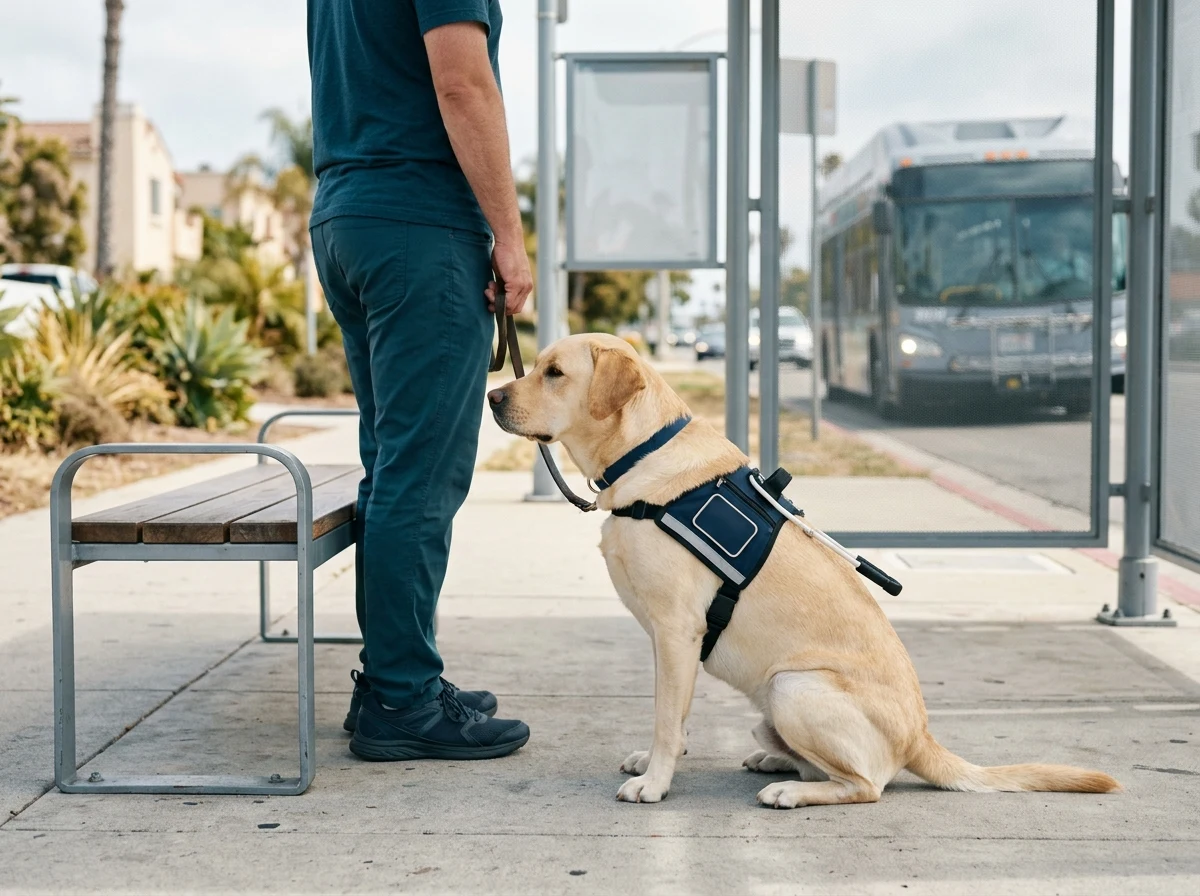
Public access training means the dog stays steady in stores, on buses, in medical offices and in restaurants. Practice in short sessions that gradually add distraction. If the dog shows fear or stress, back up to an easier setting. Rushing a dog into busy places can create the problems you are trying to prevent.
Disability-related tasks
This is what separates a service dog from a pet. The task must be directly related to your disability. California's statute gives examples such as pulling a wheelchair and fetching dropped items. Signal dogs alert a deaf or hard of hearing person to sounds. Program listings also name tasks like diabetic alert, seizure alert and medical alert work.
Write down the specific tasks your dog performs. If staff ask the second ADA question, you can answer clearly and briefly without explaining your condition.
Methods that are safe and humane
Choose reward-based methods, in line with the American Veterinary Society of Animal Behavior (AVSAB). Do not use shock, prong or choke collars, alpha rolls, scruffing or dominance methods. Aversive handling can raise fear and stress, which is the opposite of what a working dog needs in a crowded public place.
When you interview a trainer, ask how they motivate the dog and what they do when it makes a mistake. A trainer who relies on pain or intimidation is not a fit.
How long it takes
None of our sources publish a standard timeline, and it varies with the dog, the tasks and the handler's experience. Programs may also have waitlists and puppy-raising phases. The OC Animal Care form, for example, mentions a puppy fostered for a service dog organization for usually up to 15 months. For a real estimate, ask the program or trainer you are considering.
Costs and how to plan for them
This is where honesty matters most. The sources we have do not give a single typical price for a service dog in California, and we will not invent one.
What is known
- Canine Companions states on its site that every service and facility dog is free to those it serves.
- Freedom Dogs states that its dogs are delivered free of charge to veterans and active-duty service members.
- Sam Simon Foundation Assistance Dogs states that all services are free, with no cost to apply. Applicants must live in California or Oregon.
- For Guide Dogs for the Blind, Guide Dogs of America, Pawsitive Teams, Little Angels, California Service Dog Academy and Paws for Purple Hearts, we found no published cost. Ask each organization directly.
Costs that sit outside a program
Even when a dog is free, the handler carries the dog's ongoing expenses. Plan for veterinary care, food, equipment, local dog licensing and the county tag if you need one. The DOJ says service animals follow the same local licensing, registration and vaccination rules as all dogs. Tag fees were not published on the county pages we reviewed, so ask your county animal services office.
If you train the dog yourself
Owner training avoids a program's application process, but it is not free. Budget for classes or private sessions if you want help, plus the same ongoing costs above. We cannot give you a trainer's price. Rates vary by trainer, and no California price source is available to us.
Be careful with registration sellers
Any fee for a "registration," "certification" or ID card from a website is money spent on something with no legal effect under the ADA. In California, selling or offering an emotional support dog as entitled to service dog rights can bring civil penalties under Health and Safety Code 122319. Treat sellers who promise instant legal status as a warning sign.
Veterans and the VA benefit
The U.S. Department of Veterans Affairs does not provide service dogs. It does provide veterinary health care and other benefits for guide dogs and for hearing and mobility service dogs prescribed to Veterans with visual, hearing or substantial mobility impairment (38 CFR 17.148). To be recognized for the benefit, the dog and Veteran must have completed a program from an organization accredited by Assistance Dogs International or one other accreditor listed on the VA page. If you are a Veteran considering owner training, check the VA page first, because that requirement may affect your eligibility.
California programs that focus on veterans include Freedom Dogs, Paws for Purple Hearts and the Sentinel Dogs veteran program at California Service Dog Academy. Its applications were closed when last checked.
Where to start, and where to complain
A practical order of steps
- Define what you need. Write down the tasks that would help with your disability. This tells you which programs fit, or what to train.
- Read the definitions. Make sure the dog you want fits the ADA's "individually trained to do work or tasks" test and not the emotional support category.
- Choose a route. Contact one or two programs from the table and ask about eligibility, waitlists, cost and service area. If you prefer owner training, ask whether any program will support you.
- Get your county tag if you will train in public. Contact your county animal services office about the assistance dog identification tag and local licensing.
- Train with reward-based methods. Build manners, public access skills and tasks in stages.
- Know your two answers. Be ready to say the dog is required because of a disability, and name the tasks it performs.
If you are denied access
This guide explains what the statutes say. It is not legal advice. If a business, landlord or employer refuses your service dog, the California Civil Rights Department is the agency named for complaints under Civil Code 54.3. Its complaint process is on the CRD site. The DOJ's service animal FAQ also explains your federal rights in detail. For a specific dispute, consider talking with a disability rights organization or an attorney.
Check before you rely on this page
Laws change. The statute text was reviewed in 2026, but we do not claim every section is current to the day. Confirm the current wording on the California Legislative Information site, and confirm program details such as costs, eligibility and open applications with each organization.
Sources
- U.S. Department of Justice, ADA.gov: ADA Requirements: Service Animals
- U.S. Department of Justice, ADA.gov: Frequently Asked Questions about Service Animals and the ADA
- California Legislative Information: Civil Code 54.2
- California Legislative Information: Civil Code 54.3
- California Legislative Information: Penal Code 365.5
- California Legislative Information: Penal Code 365.7
- California Legislative Information: Food and Agricultural Code, Chapter 3.5
- California Legislative Information: Health and Safety Code, Article 4
- California Code of Regulations, title 2, section 12005
- California Code of Regulations, title 2, section 11065
- California Civil Rights Department: legal alert on emotional support animals in housing
- California Civil Rights Department: complaint process
- U.S. Department of Veterans Affairs: Service Dog Veterinary Health Benefit
- Assistance Dogs International: California member search
- Ventura County Animal Services: assistance dog tag
- County of San Luis Obispo Animal Services: assistance animal identification tags
- OC Animal Care: Assistance Dog Application and Affidavit
- Canine Companions
- Guide Dogs for the Blind
- Guide Dogs of America / Tender Loving Canines
- Pawsitive Teams
- Freedom Dogs
- Little Angels Service Dogs
- Sam Simon Foundation Assistance Dogs
- California Service Dog Academy
- Paws for Purple Hearts